
Hrudka – Ukrainian Egg Cheese



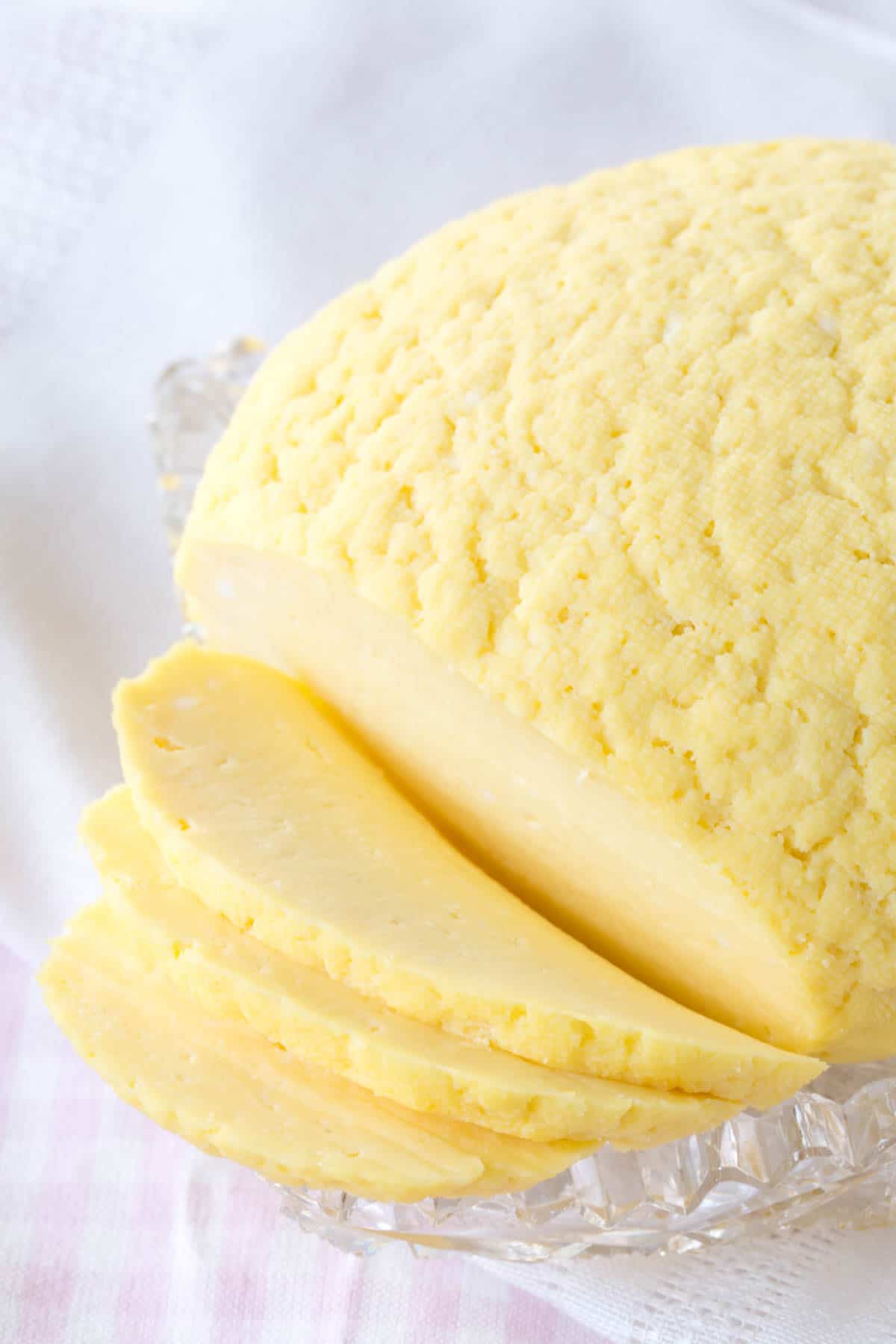
Hrudka is a Ukrainian Easter cheese made from eggs, and this is the recipe that has been part of my family’s Eastern European holiday tradition for generations. Egg cheese is a traditional Ukrainian Easter food that is always part of our Slovak Easter menu.
Delicious Details
- Cuisine Inspiration: Ukrainian
- Primary Cooking Method: Stovetop, Oven
- Dietary Info: Gluten-free
- Skill Level: Moderate
Hrudka – Ukrainian Easter Cheese Recipe
If you are Ukrainian, Polish, Slovak, or of other Eastern European descent and want to connect with your roots, or just like trying new and unique recipes from different regions of the world, give this Hrudka recipe a try. It’s easy, fun, and pretty awesome to say that you made your own cheese!
This cheese is one of the Ukrainian Easter foods that we put in our Easter basket to be blessed at church on Holy Saturday. Each one has a significance. The homemade bread is a symbol of Jesus, the Bread of Life. Horseradish is usually mixed with beets and the color is a symbol of the blood he shed for us. Eggs are a symbol of new life and the rebirth of Christ. A candle is lit to symbolize the Light of the World.
Cheese is also symbolic of the moderation Christians should have in their lives. Combine that with the symbolism of the Easter egg, and it only makes sense to make cheese out of eggs for this holiday.
It is definitely something different, and, from what I can find, unique to Eastern Europe. A Google search for “egg cheese” turns up lots of cheese eggs, but really only Hrudka as actual cheese made from eggs.
What Does Hrudka Taste Like?
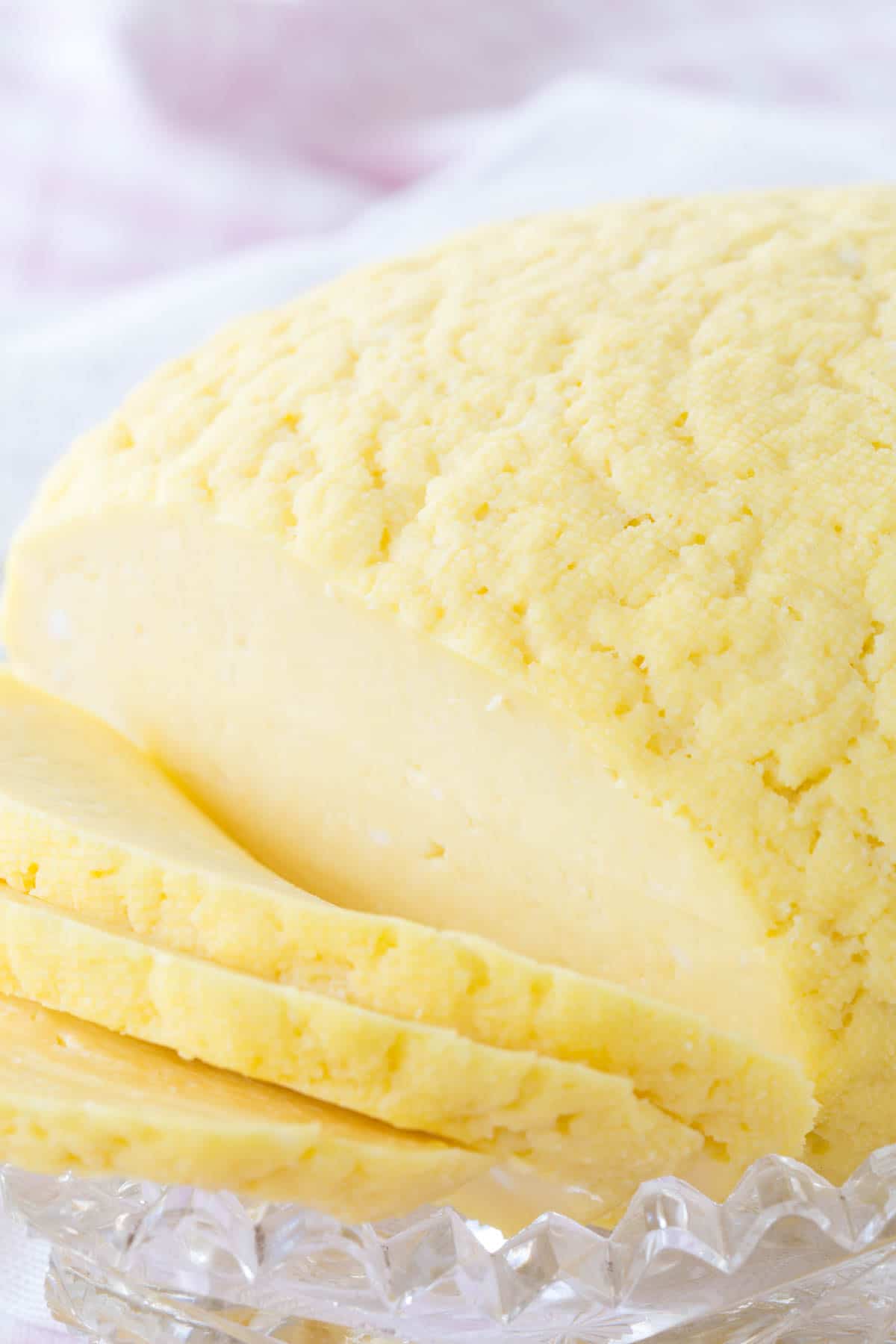
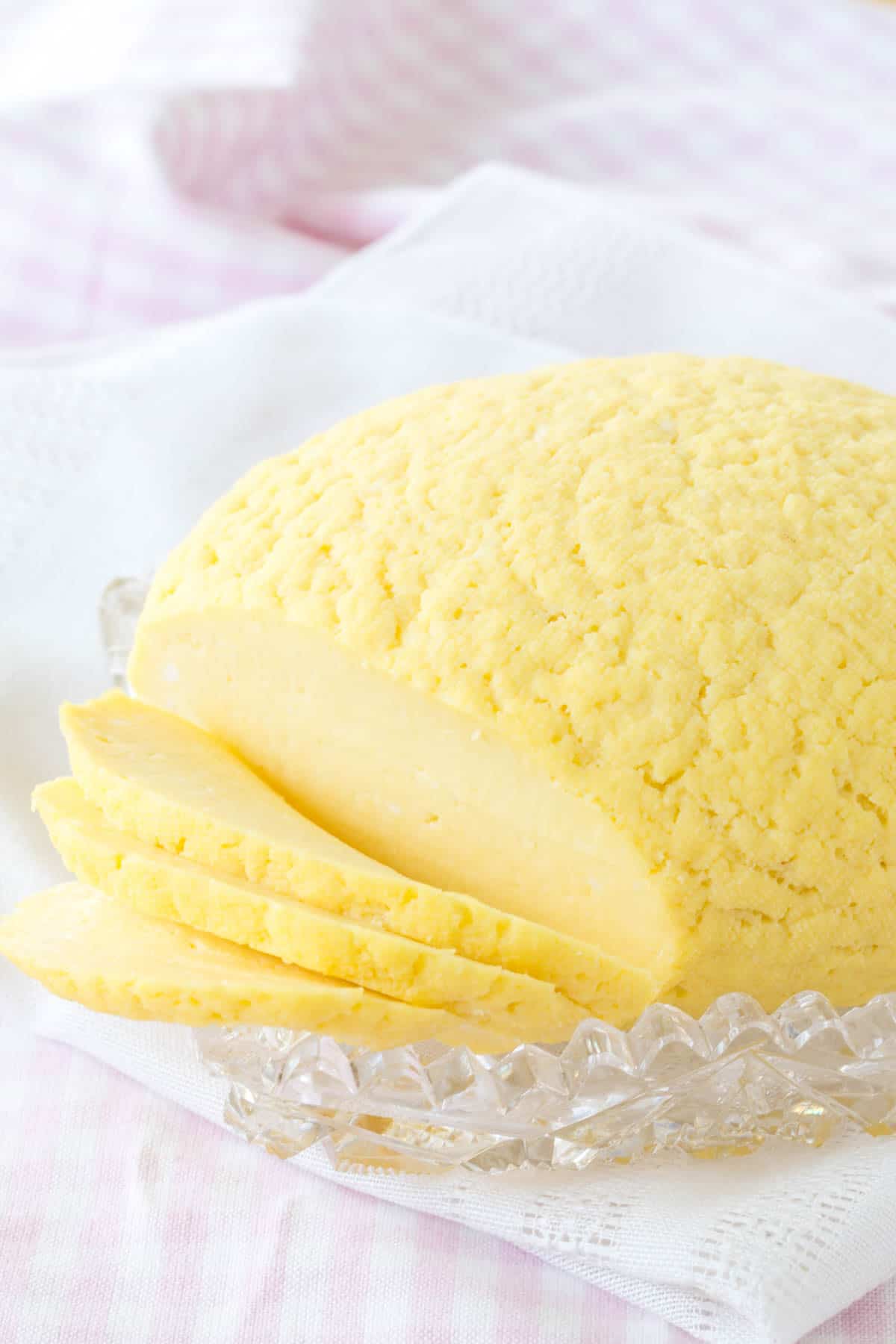
In our family, while my mom was helping my grandma make Paska, my aunt was making the Easter cheeses – the sweet Syrnyk, and this one. While it may be called “egg cheese” it does not taste like scrambled eggs or cheesy eggs. It’s smooth and slightly sweet, and not quite as salty as other cheeses. It is definitely milder, not like a sharp cheddar, and perhaps more similar in texture to mozzarella. And it goes well along with an Easter ham.
Recipe Ingredients
You only need four ingredients to make this Ukrainian Easter food. Here’s a list of what you’ll need for my family’s hrudka recipe. Keep reading for some tips, then scroll to the recipe card for the full amounts and step-by-step instructions.
- Eggs. You’ll need a full dozen.
- Whole milk. I do not recommend using low-fat or skim milk.
- Sugar. This is not a sweet dessert cheese, but there is a little sugar for a hint of sweetness.
- Salt. Just a little as a flavor enhancer.
Tips for Success
- Have the items you’ll need. For the most part, you just need standard kitchen items, like a pot, a whisk, and a heat-proof bowl (glass is fine), as well as a shallow baking dish. But make sure you have cheesecloth, as this is essential for straining the whey to form the ball of cheese.
- Know what to look for. While you do need to use a bowl set over a simmering pot of water as a double boiler versus direct heat to avoid overcooking the mixture, you do want to cook it long enough. It’ll take about 20-30 minutes for the curds to separate from the whey, and it’ll look similar to scrambled eggs.
- Strain fully. You’ll need to keep the cheesecloth wrapped tightly around the cheese to drain for several hours or overnight in the refrigerator to ensure all of the whey has drained off.
Storing Homemade Cheese
The Hrudka should be kept covered in the refrigerator. It is best enjoyed within 2 to 3 days. I do not recommend freezing Hrudka.
More Ukrainian Easter Recipes
- Paska – Ukrainian Easter Bread
- Pot Cheese and Potato Cheese Pierogi (my recipe is gluten free!)
- Syrnyk – Sweet Ukrainian Easter Cheese
You can also try Haluski or Fried Cabbage and Noodles from A Family Feast. Sweet and Sour Cabbage Rolls from Noble Pig are always a classic. And though more popular around Christmas than Easter, you can’t go wrong with Nut Roll from Brown Eyed Baker.
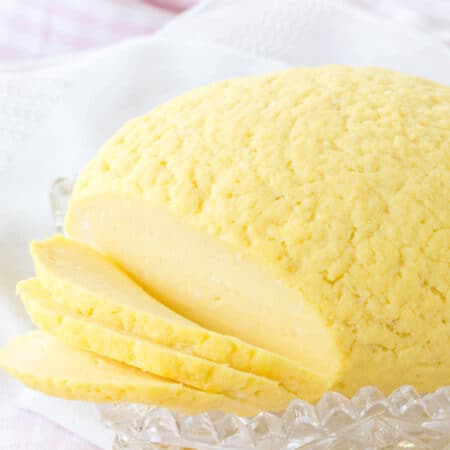
Hrudka – Ukrainian Egg Cheese for Easter
Ingredients
- 12 large eggs
- 1 quart whole milk
- 2 Tablespoons granulated sugar
- 1 teaspoon salt
Instructions
- Line a strainer with cheesecloth and set aside.
- Combine 12 large eggs, 1 quart whole milk, 2 Tablespoons granulated sugar, and 1 teaspoon salt in a heat-proof bowl or the top of a double boiler and whisk until combined.
- Place bowl over a pot of water or assemble the double boiler and, over medium heat, bring the water to a simmer. Cook, stirring very frequently, until the mixture begins to thicken and then the curds separate from the whey. This will take 20-30 minutes from when you start to see the curds begin to form, and it will look similar to scrambled eggs when it is done.
- Pour the mixture into the cheesecloth to drain off the liquid (the whey), and allow to drain for several minutes. Then gather the cheesecloth, forming the cheese into a ball and squeeze out as much liquid as possible, allowing to cool until you can handle it, if necessary.
- Keeping the cheesecloth wrapped tightly around the cheese, drain for several hours or overnight in the refrigerator.
- Preheat the oven to 350°F and place the cheese in an oven-safe dish. Bake for about 30 minutes or until golden.
- Cool completely in the refrigerator before slicing. Serve with your Easter ham.
Did you make this?
Leave a star rating to help others know that they should make this recipe.
Share a photo and tag @cupcakesandkalechips on Instagram!
WOW! I learned so much!! Thank you so much for sharing! I think it’s wonderful you are digging into your roots through recipes. Can’t wait to come back and learn more!
I am half Ukrainian and know all too well about the traditions of Holy Saturday and all that goes with it, but I have to say, I have never had egg cheese! I’ll have to give it a try sometime!
I definitely need to try this!
Oh wow! What a neat recipe! I have never heard of this before.
Wow this egg cheese sounds amazing! I can’t wait to try it!
How interesting! I had never heard of this cheese before. Will definitely have to try it.
Brianne, NEVER have heard of this, but my mouth is watering right now. I really want to try this!
I never knew such a thing existed! Glad you recreated this traditional dish—and came to love it! I would, too!!!
I love this post Brianne! This is so unique and very interesting. After reading your recipe I am pretty sure I would eat this and I may have to give this one a hand at making too!
How very interesting, Brianne! I couldn’t wait to see this recipe and it does not disappoint! I love learning about food traditions around the world.